
Biomedical instruments, predictive signal processing, and the FHIR-native data plane that connects them.
Clinical-grade spirometry outside the clinic — FEV1, FVC, and peak flow measured against ATS/ERS criteria with per-patient baselines.
Wearable EEG fused with autonomic signals — heart-rate variability, electrodermal activity, and temperature — for continuous risk modeling.
Surface EMG and vibroacoustic classification of swallowing events, built to flag silent aspiration before pneumonia develops.
An HL7 FHIR R4 data plane that turns every device stream into a canonical, exportable patient record clinicians can actually reach.
Medicine observes in snapshots — a spirometry curve once a year, an EEG after the second seizure, a swallow study only in hospital. Disease develops in the interval between them.
MSTFA Industries builds the instruments that move clinical-grade measurement into daily life, and the data infrastructure that makes those measurements legible to the physician at the point of decision.
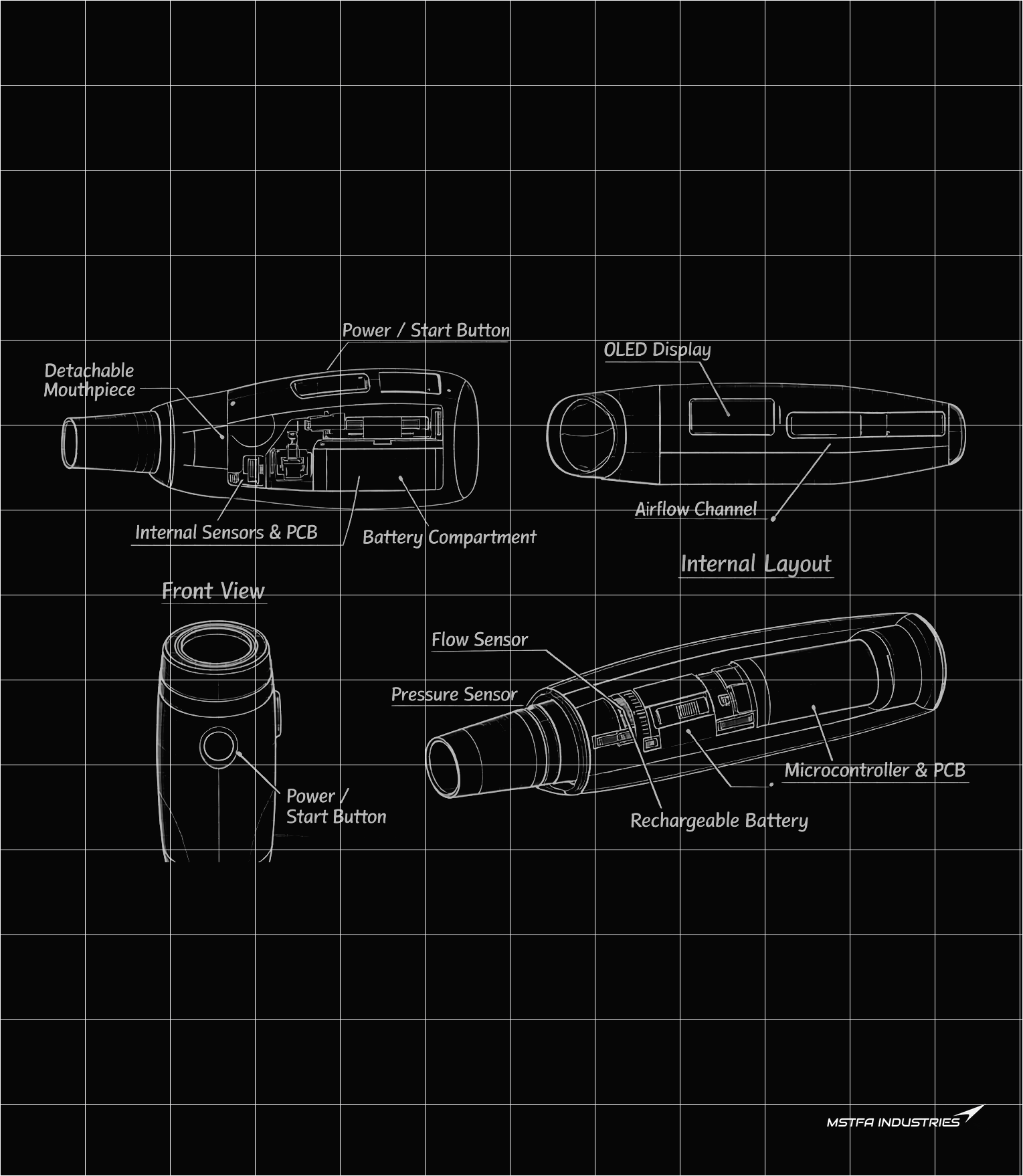
Handheld pulmonary function instrument. Four core metrics against ATS/ERS criteria, with anomaly detection on a personal baseline.
Behind-the-ear patch fusing two-channel EEG with PPG, EDA, and skin temperature into a continuous physiological risk model.
Anterior-neck patch classifying every swallow in real time — built to detect silent aspiration as it happens.
The FHIR R4 biosignal data plane underneath the portfolio. One canonical record per patient, fully exportable.
Clinicians, researchers, engineers, and investors — if continuous physiological measurement should exist, we want to hear from you.
Thesis, market, use of funds, and risk — the numbers and the caveats on one page.